If John Hunt had access to a time machine or a DeLorean with a Mr. Fusion Home Energy Reactor, he would be able to peer westward from his 1805 cabin overlooking the big spring and see Huntsville’s future towering on the horizon. As the nation prepares to observe the 250th anniversary of the Declaration of Independence, Alabama’s first capital will join in celebrating the heritage of the city, state, and country. Coincidentally, Huntsville was selected to draft Alabama's first constitution and serve as the state's first capital in 1819 because of its economic prosperity.
John Hunt - the city’s founder - was known for his skills in breaking trails and identifying the best routes for new roadways. Huntsville and its residents have gained a reputation for breaking trails and setting the pace, be it high tech, aerospace, or lifestyle. Just six years after Hunt built his first cabin and settled in the area, the city was officially incorporated in 1811, just as Alabama was preparing to transition from a territory to a state.
In 1819, Huntsville hosted a constitutional convention where 44 delegates wrote a constitution for the new state of Alabama. In accordance with the constitution, Huntsville became Alabama's first capital when the state was admitted to the Union. Huntsville’s early economy was significantly boosted by its agriculture, notably cotton, which thrived in the fertile soils of the region. Access to the Tennessee River through canals and roads facilitated easy transport of goods, making it a key player in regional trade. Today, the city is the largest in the state and continues to be the economic engine for the region and state.
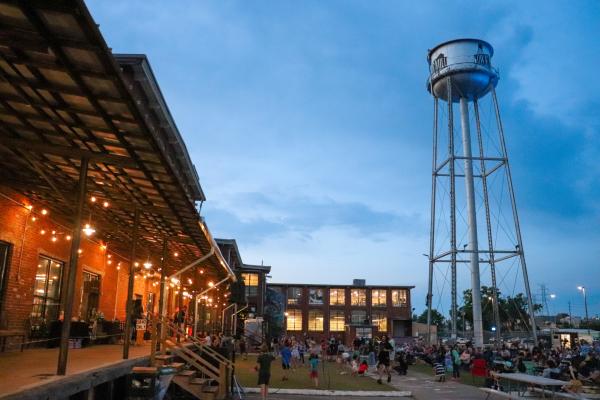
Cotton and the mills
For more than a century after its founding, Huntsville was an agriculturally based city. The surrounding cotton plantations, supported by slave labor, fed the textile mills of the region and nation with the valuable commodity. By the mid-1800s, Huntsville had developed into a cultural and economic beacon in North Alabama, marked by its Greek revival architecture, which can be found in the city’s Twickenham Historic District. After the Civil War, the area focused on establishing its own textile mills. With funding from northern financiers during Reconstruction, a wave of working-class mill villages built around the mills swept across the city.
The Dallas, Lincoln, Lowe, and Merrimack mill communities emerged as prominent working-class districts, helping to shape Huntsville’s geographical and cultural layout. Only Lowe Mill, built in 1900, still stands, but it has since been repurposed into Lowe Mill Arts & Entertainment - the nation’s largest privately owned arts and entertainment facility, totaling 153 public studios, seven galleries, four performance venues, and more than 300 working artists. Sitting on 12 acres, the former textile mill has 190,000 square feet for artists and is about the size of 3 1/2 football fields.
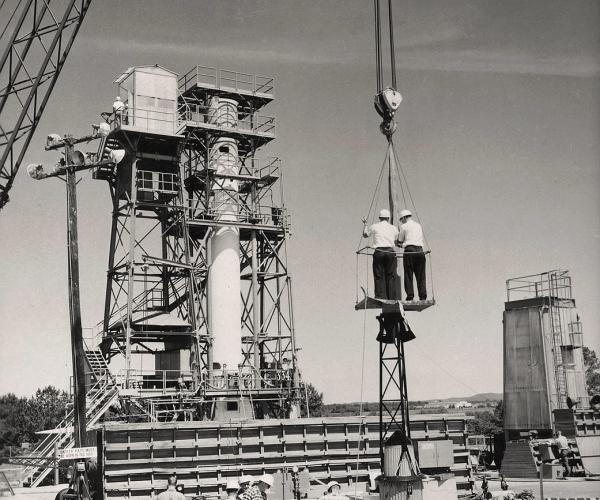
World War II and the Army
The trajectory of Huntsville changed drastically in 1941 when the Army established the Huntsville Arsenal to produce and store chemical munitions. In the immediate post-war era, the newly named Redstone Arsenal was used for research and development by German rocket scientists led by Dr. Wernher von Braun. The team worked on ballistic missiles, starting with the German V-2 rocket derivatives, before moving on to a series of ever larger designs. Many of their tests were carried out at White Sands (N.M.) Missile Range in New Mexico.
The military infrastructure laid the foundation for the federal government's continued investment in the region, bringing massive growth to a formerly quiet, agrarian town. The city’s integration into the defense and space industries brought thousands of jobs while reshaping its economy and demographic makeup.
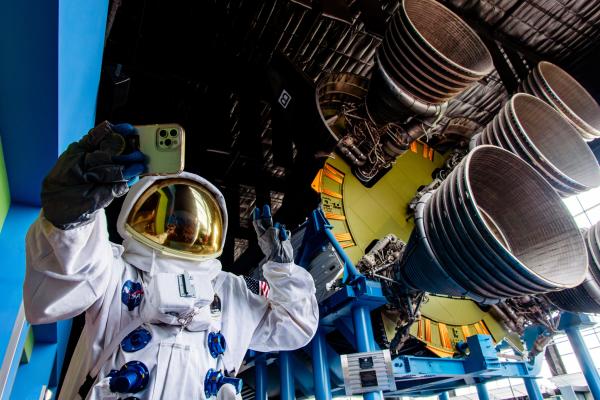
The Rocket City and Huntsville’s next frontier
The first successful U.S. satellite, Explorer I, was launched in 1958 with a rocket developed in Huntsville, marking a significant milestone in America’s entry into the space race. Marshall engineers designed the massive engines that powered the Saturn V as it carried astronauts to orbit and, eventually, the moon. They also designed groundbreaking booster engines that fell to Earth after lifting the space shuttle to orbit. Now, they are designing the next generation of rockets that will return humans to the moon with an eventual destination of Mars.
The U.S. Space & Rocket Center, the state’s top tourist attraction, highlights the city’s space heritage. It houses extensive exhibits on America’s space journey, from the early satellites and manned Apollo missions to modern space exploration endeavors. The center also hosts an IMAX theater, and visitors can take a bus tour of the Marshall Space Flight Center. Huntsville is also the home of the U.S. Space Command and the Missile Defense Agency, among other government entities, contributing to its importance to the nation’s defense as well as space exploration.
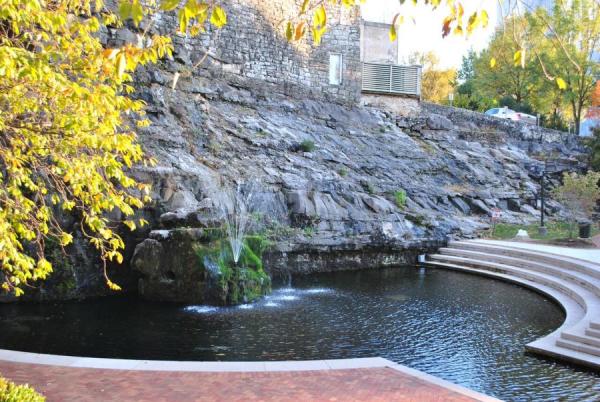
Huntsville’s launch pad from the past to the future
In short, from high cotton to high tech, Huntsville’s past offers a pathway to the future unlike anywhere else.
- Big Spring International Park in downtown Huntsville is named for a spring named "the big spring" by the Cherokee and Chickasaw tribes. Hearing of the abundant water source and plentiful big game, Hunt sought out the spring and settled on the bluff overlooking it in 1805. During the 19th century and the first half of the 20th century, the spring was Huntsville's water source.
- Five Points Historic District offers charming mid-century bungalow homes that were built to accommodate workers at the nearby Dallas and Lincoln mills.
- U.S. Space & Rocket Center is the state’s top tourist attraction. Along with a stellar collection of exhibits - including spacecraft- the center hosts Space Camp and Aviation Challenge, which are designed to educate and inspire the next generation of engineers, scientists, and astronauts.
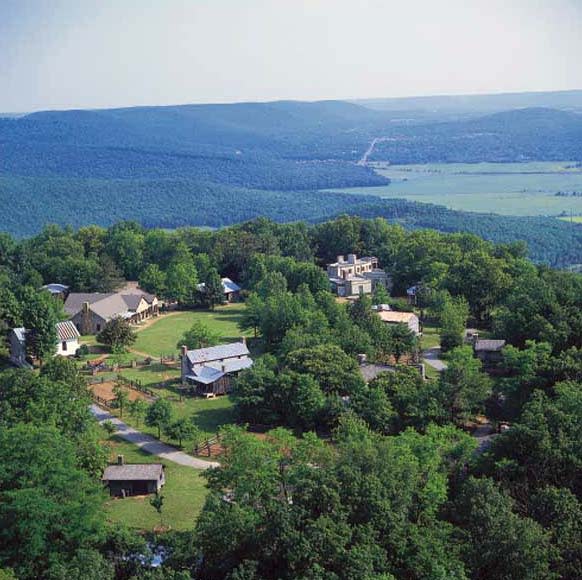
- Burritt on the Mountain is a park that offers visitors a chance to step into the past with a breathtaking view overlooking Huntsville. Major 19th-century buildings include the Balch House, originally built in 1887 near Harvest; the Chandler House, a dogtrot house from Limestone County; an 1884 church that originally stood in downtown Madison; the Meals House, an 1845 cabin from Limestone County; the Smith-Williams House, an 1868 marriage of two 1840s structures originally from McKay Hollow at the foot of Monte Sano; and an 1890s barn from near Minor Hill, Tenn. The museum also features two buildings that are listed on the National Register of Historic Places: Burritt Mansion and the Joel Eddins House.
- Historic Huntsville Depot, built in 1860 on the Norfolk Southern Railway line in downtown Huntsville, is the oldest surviving railroad depot in Alabama and one of the oldest in the U.S. It is listed on the Alabama Register of Landmarks and Heritage and the National Register of Historic Places. Linking Huntsville’s past to its future, Dr. Werner Von Braun and his team of German rocket scientists arrived in Huntsville at the Depot in April 1950.
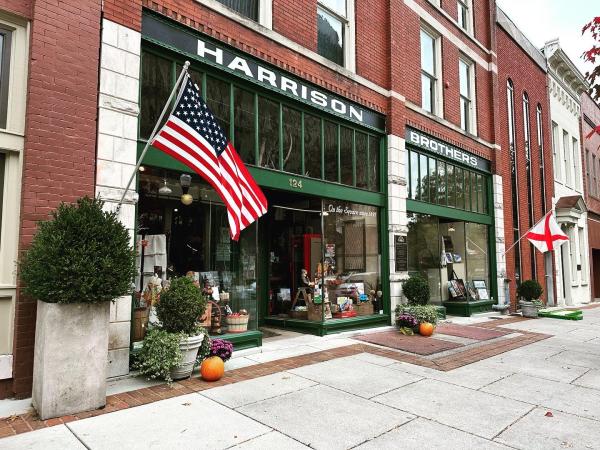
- Harrison Brothers Hardware, owned and operated by the Historic Huntsville Foundation, opened in 1897 on the Courthouse Square. The store retains its original appearance with its counters, shelves, wood floors, and fixtures still intact. To add to the living history, sales are rung up on the 1907 National Cash Register used by James and Daniel Harrison.
- Twickenham Historic District showcases grand Federal and Greek Revival mansions.
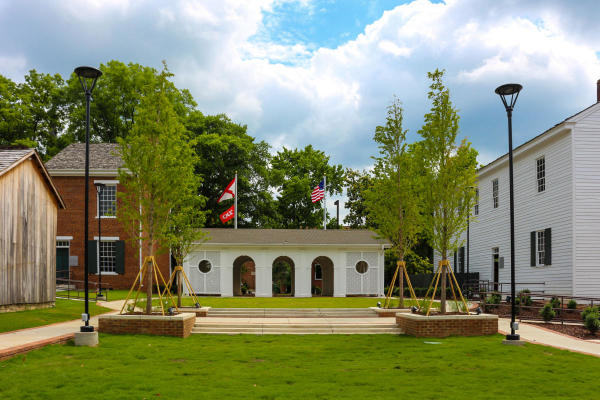
- Constitution Hall Park showcases life in 1819. Discovered during an archaeological dig in the 1970s, the downtown site has four buildings that were restored on their original foundations: Constitution Hall, the Clay building, the Boardman Complex, and the Neal House. The buildings include a blacksmith's shop, library, law office, print shop, land surveyor's office, post office, cabinetmaker's shop, and residence.
- Old Town Historic District features Victorian and early 20th-century residential architecture.