A dead children’s playground, Civil War ghosts, Haunted houses, Ghost walks: Renowned for its missile and technological legacies, Huntsville’s history is also linked to apparitions, favorite haunts, and things that go bump in the night.
In fact, let’s just go ahead and rename our fair city “Hauntsville.” Yeah, that’s the spirit.
The 19th century homes and neighborhoods are the stuff of legends. Maple Hill Cemetery - the city’s oldest cemetery - is rife with stories of spirits not quite resting in peace. Two of the cemetery legends involve the family of Gov. Thomas Bibb, the state’s second governor. His daughter-in-law Mary Chambers Bibb died in 1835 after being accidentally poisoned by a servant on her wedding day. Her husband William built a mausoleum - Maple Hill Cemetery's first - and, according to legend, she was interred sitting upright in her favorite rocking chair wearing her wedding dress. The story goes, if someone knocks on the side of the mausoleum, they can hear the creaking sound of her rocking back and forth inside.
Meanwhile, four years later, Thomas Bibb died while on a visit to New Orleans. When his body was returned, he was buried at his Belle Mina plantation in Limestone County. At the time, Maple Hill was rumored to become the “cemetery of governors,” and Bibb’s family moved his body to be reburied there. But Bibb’s spirit longed to be “home,” and legend has it that on nights with a full moon, a glowing carriage pulled by white horses arrives at his grave. Then, the former governor's spirit is said to rise, climb inside, and ride through the cemetery trying to find his way back home.
Let’s take a look at some of Huntsville’s most popular haunts.
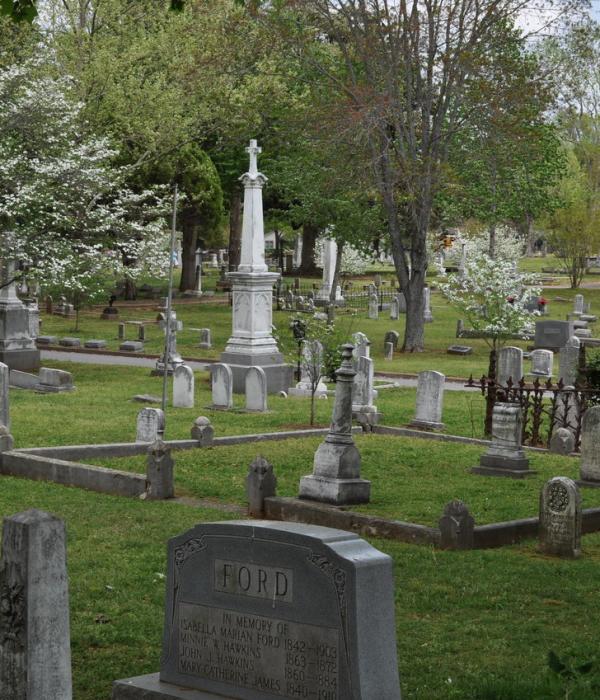
Dating to the early 1800s, Maple Hill is the final resting place for former governors and those who contributed to the history of the state and city.
A guide-led walking tour takes visitors on a stroll through the city’s history with stories and, of course, legends.
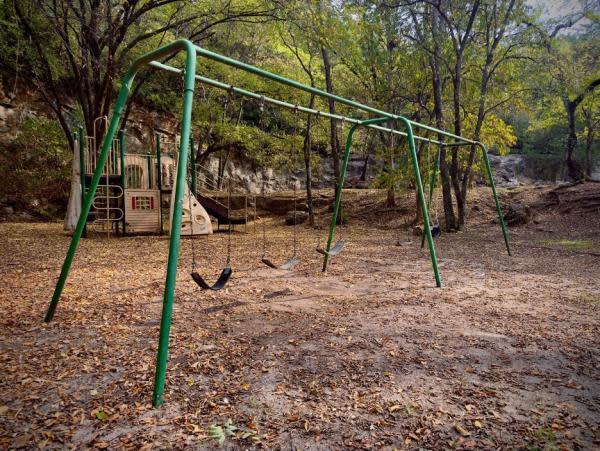
Dead Children’s Playground
Adjacent to Maple Hill Cemetery, visitors claim swings move on their own, and children laugh at night.
The cemetery is the final resting place for many children who perished during the deadly Huntsville flu epidemic of 1918. It’s said the ghosts of the children come out and play on the equipment.
In efforts to prevent the disease from spreading, parents told their children to keep the windows closed.
And, it’s said, if you listen closely among the ghostly swings, you can hear a rhyme:
“I had a bird,
“Its name was Enza.
“I opened the window,
“and in flew Enza.”
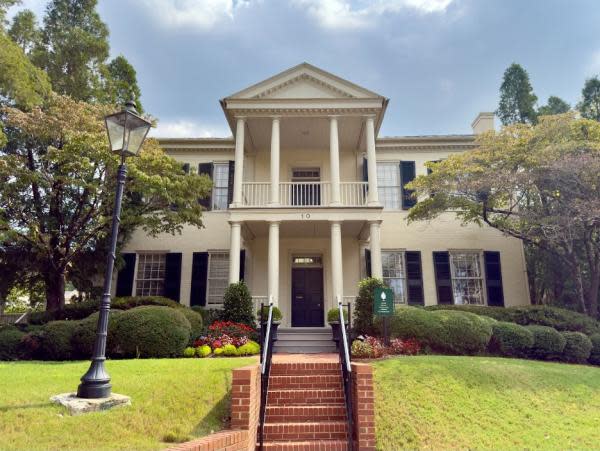
Also called the Sally Carter House, this antebellum home is rumored to host the restless spirit of a teenage girl despite her grave being moved to Maple Hill.
Sally Carter, just three weeks shy of her 16th birthday, was visiting her sister and fell ill - likely from the flu pandemic that crippled Huntsville and afflicted hundreds of people.
Sally died in the house and was buried on the property.
The ghost stories began in 1919 after a young man staying in Sally’s bedroom was visited by her ghost in the middle of a stormy night. He claimed she told him to fix her gravestone, which had fallen over during the storm. The next morning, he visited her grave to find that the gravestone had fallen over.
The tale does not end here. The family eventually exhumed and relocated her body to an undisclosed location at Maple Hill.
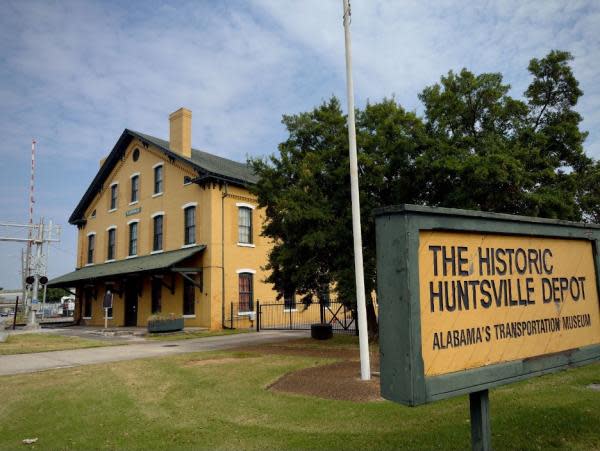
Built in 1860, this is one of the oldest train depots in the nation. Confederate soldiers were imprisoned on the third floor, where they scratched names, sketches, and words into the plaster walls. Ghosts have been sighted on the second and third floors.
Visitors reported hearing phantom footsteps and even seeing a train engineer pacing on the platform.
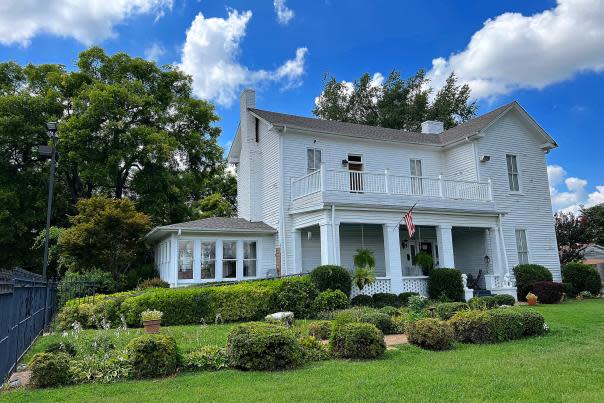
This 1850s Greek Revival home at 1205 Kildare Street served as part of the Underground Railroad. It is known for flickering lights and the spirit of Anne Lowry.
One of the most haunted locations in Alabama, ghost sightings have been reported, including a full-body apparition in the kitchen.
The house is open to the public and offers personal or group tours.
Walks on the wild side
For those who would like an autumn stroll through Huntsville history, there are several “ghost walks” every weekend in October.
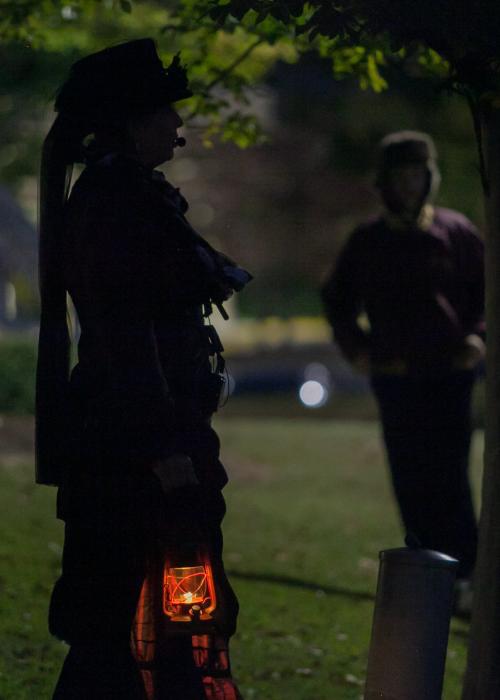
The Twickenham Ghost Walk travels through the oldest streets in Huntsville. Stops include Helion Masonic Lodge, the LeRoy Pope mansion, Gov. Bibb's mansion, as well as the birthplace of Gen. John Hunt Morgan, known as "The Thunderbolt of the Confederacy."
The Old Town Ghost Walk begins with the haunting in the courthouse and takes visitors into the Old Town Historic District, where visitors learn about the soldier who was shot in World War I, children who sing a haunting tune on Walker Street, and a Union soldier looking for his amputated leg.
The Downtown Ghost Tour features the most murders. A frightened Union soldier hiding from Confederate soldiers, a bellhop still on duty at the Hotel Russel Erskine, and the residue left from a crowd angry over the ax murder of a policeman are explained in detail.
Visit graves of the men who fought, were imprisoned, and died in the War Between the States - the nation’s deadliest conflict. Stories include the man who ordered the first shot fired at Fort Sumter, a member of the "Immortal 600," a Union general, and President Lincoln's brother-in-law.